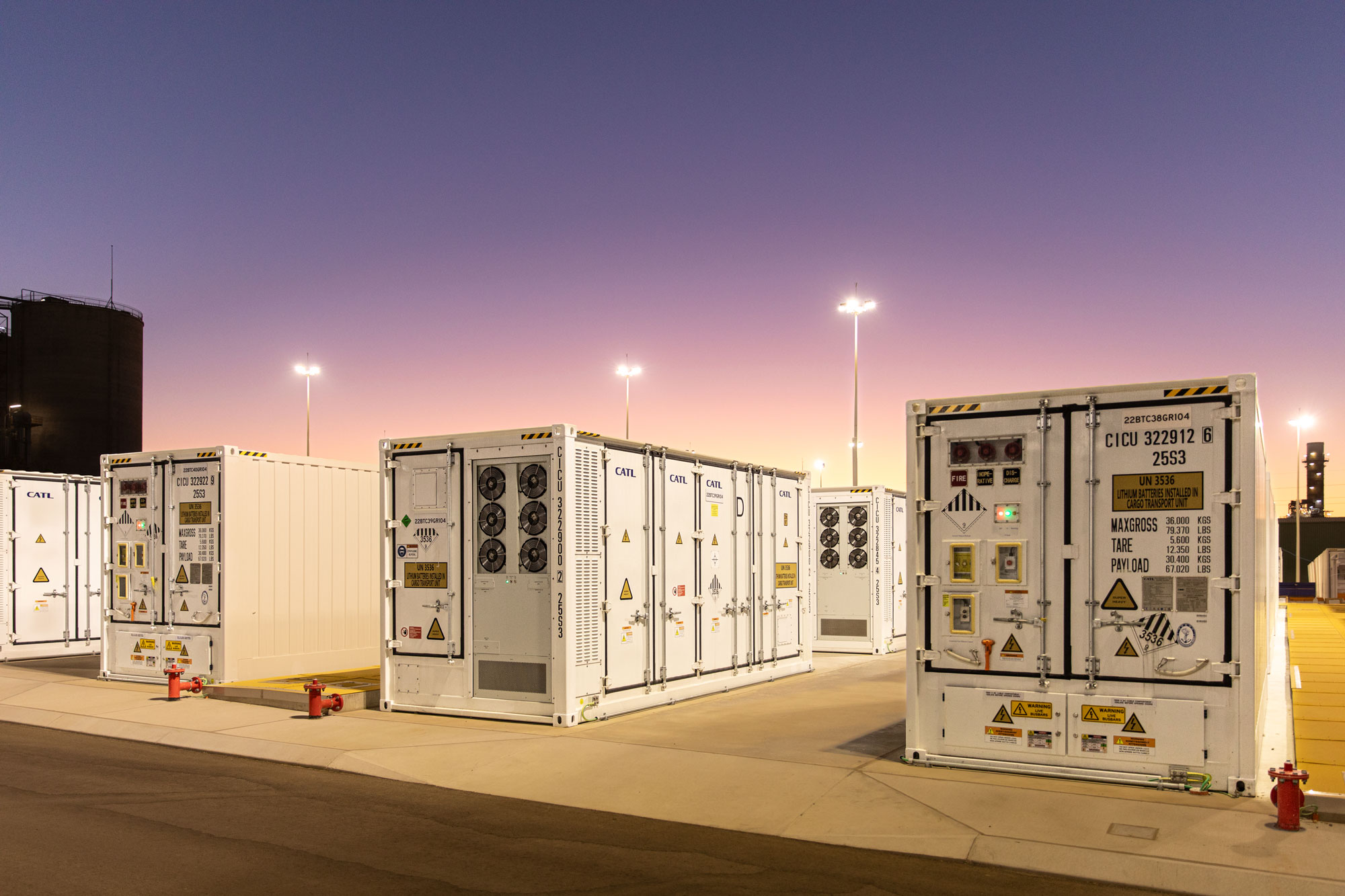

For the third year running, batteries have topped the list of technologies entering construction, with 2025 marking another milestone: over 4.1GW (11.9GWh) of utility-scale storage breaking ground.
But this isn’t just a race for capacity, it’s a race for capability.
As renewables flood the grid and coal is edged out, flexibility has become just as valuable as generation. And batteries – fast, scalable and increasingly essential – are becoming central to how the system remains balanced.
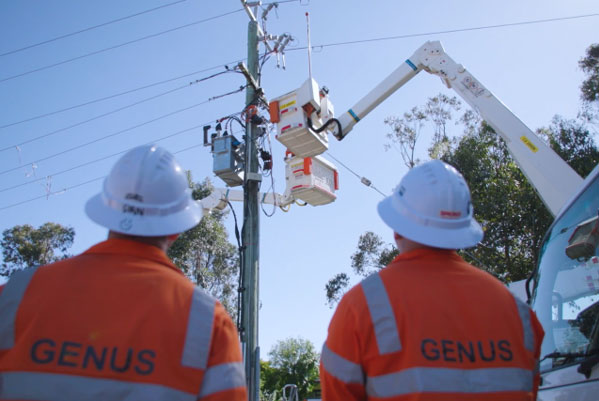
Few companies have been closer to this shift than GenusPlus Group, known simply as Genus.
With large-scale battery projects delivered across both the National Electricity Market (NEM) and Western Australia’s isolated grid, including Merredin, Kwinana and the Melbourne Renewable Energy Hub, Genus has seen the growth of storage first-hand.
And according to chief operating officer David Fyfe, the company is only getting started.
“Batteries don’t generate electricity, they move it,” Fyfe said. “They’re not on the edges anymore. They’re forming the core of how the system works.”
High rooftop solar uptake, particularly in WA where over a half of households have deployed their own PV, and surging wind output is bending the traditional load curve. Daytime oversupply is no longer rare, it’s the new normal.
This means one thing: the grid needs tools that can shift power with precision. Batteries are that tool.
They’re already playing a significant role in grid balancing. During the most recent WA summer, more than a gigawatt of installed battery capacity was on hand to support the system through volatile conditions.
They’re also fast to deploy. While wind and transmission projects often face multi-year development horizons, batteries can go from concept to commissioning in a fraction of the time.
But that doesn’t make them straight forward.
“If you’re applying overseas battery models here, you’ll fall behind,” Fyfe said.
Australia’s mix of market rules, grid topologies and environmental conditions creates complexity that no offshore playbook accounts for.
WA’s grid stands alone, serving remote communities with long feeders and sparse redundancy. Each NEM jurisdiction brings its own network rules, connection standards and stakeholder expectations.
“No two projects are cookie cutter,” Fyfe said. “Every site is bespoke, from engineering to approvals and delivery.”
Site selection, connection strategy and system studies can make or break a project timeline. This is where experience excels.
The role of batteries is rapidly evolving. Once built simply to shift solar from day to night, batteries are now expected to act more like generators, delivering frequency control, inertia and, in some cases, black start capability.
Project sizes are expanding too. Two-hour systems became four, with some now six, and in some tenders, up to 10-hour durations. As durations increase, batteries begin to play a much larger role in how a system is planned and operated.
“You shouldn’t be building for today’s market,” Fyfe said. “You need to be building for what the grid will look like in five or ten years.”
Having worked across both coasts, Genus knows how to navigate regulatory friction, supplier bottlenecks and site logistics.
While Stage 2 of the Kwinana project was more than four times the size of Stage 1, it was built faster. The team already knew where the traps were.
“Experience makes it easier,” Fyfe said. “You know the pitfalls. You know where you can run things in parallel. You know what to lock in early.”
That’s why developers are increasingly bringing in contractors earlier. Collaborative front-end design allows for smarter procurement, layout optimisation and fewer costly fixes down the line. Getting delivery teams involved early helps shape constructability and sequencing before problems surface on site.
Battery storage may be digital tech, but building it is anything but virtual.
Projects face classic Australian challenges: heat, dust, salt exposure, fire risk, remote access, accommodation bottlenecks and shifting supply chains. Success often comes down to adaptability.
“You need teams that can think on their feet,” Fyfe said. “You hit problems, you solve them, and you keep moving.”
It’s the kind of environment that rewards practical, on-the-ground problem solving and teams that can stay agile as conditions change.
Coal is exiting, gas is flexing, renewables are rising, and batteries are holding it all together.
Australia’s energy transition doesn’t work without storage, and storage doesn’t work without the right delivery partners.
“Getting your contractor right makes a hell of a difference,” Fyfe said. “Sometimes the cheapest price isn’t the cheapest price.”
The next chapter of Australia’s energy story will be powered by storage. And the companies who know how to design, deliver and adapt; on-site, under pressure, and on-budget, will be the ones who shape it.
Genus is proudly powering what matters. And when it comes to batteries, what matters is getting it done right.